What is Vibe Coding and Who Are Vibe Coders
Vibe coding is a new way of building software where natural language replaces most of the traditional coding process. Instead of writing every line of code manually, a creator describes the product idea or feature in plain English, and an AI system generates the required technical components. It is a mix of creativity, reasoning, and generative automation.
A vibe coder is someone who builds through intent instead of syntax. It can be a developer, designer, entrepreneur, or even a non-technical founder who knows what they want to create and relies on AI to do the heavy lifting. The vibe coder focuses on the “what” and “why” while the AI handles the “how.”
What a vibe coder can do:
- Prototype complex ideas in hours instead of weeks
- Iterate quickly by changing prompts rather than rewriting code
- Blend business logic, design, and functionality without deep programming skills
- Launch MVPs, test market demand, and pivot without hiring a large team
However, vibe coding without structure can easily become chaotic. Projects often end up scattered across chat logs, notes, and prompts, making it hard to track progress or maintain quality. That is where Vibe Planner becomes essential.
The Core Problem: Creative Chaos Without Control
Vibe coding gives freedom but often lacks consistency. Many builders face the same pattern of problems:
- Scattered ideas and missing context
Prompts, ideas, and iterations live in different chat windows, documents, and mind maps. It is difficult to keep track of what is done and what still needs work. - No clear project roadmap
Without a structured task plan, priorities become unclear. Developers lose time deciding what to do next or forget important dependencies. - Poor collaboration and communication
When more than one person is involved, it is hard to sync progress between AI tools, code editors, and task boards. - Lack of version control and quality review
AI-generated code can work but might be hard to maintain. Without proper documentation or task tracking, technical debt grows quickly. - No visibility of real progress
Without metrics, charts, or timelines, there is no objective way to know how close the product is to completion.
This chaos slows down momentum and kills many great ideas before they turn into real products.
How Vibe Planner Solves These Problems
Vibe Planner was built specifically for vibe coders who need to stay fast but also organized. It bridges the gap between creative exploration and structured execution.
From Idea to Actionable Plan
A user can describe their project in plain English. For example, “I want a marketplace where users can sell handmade items and get reviews.”
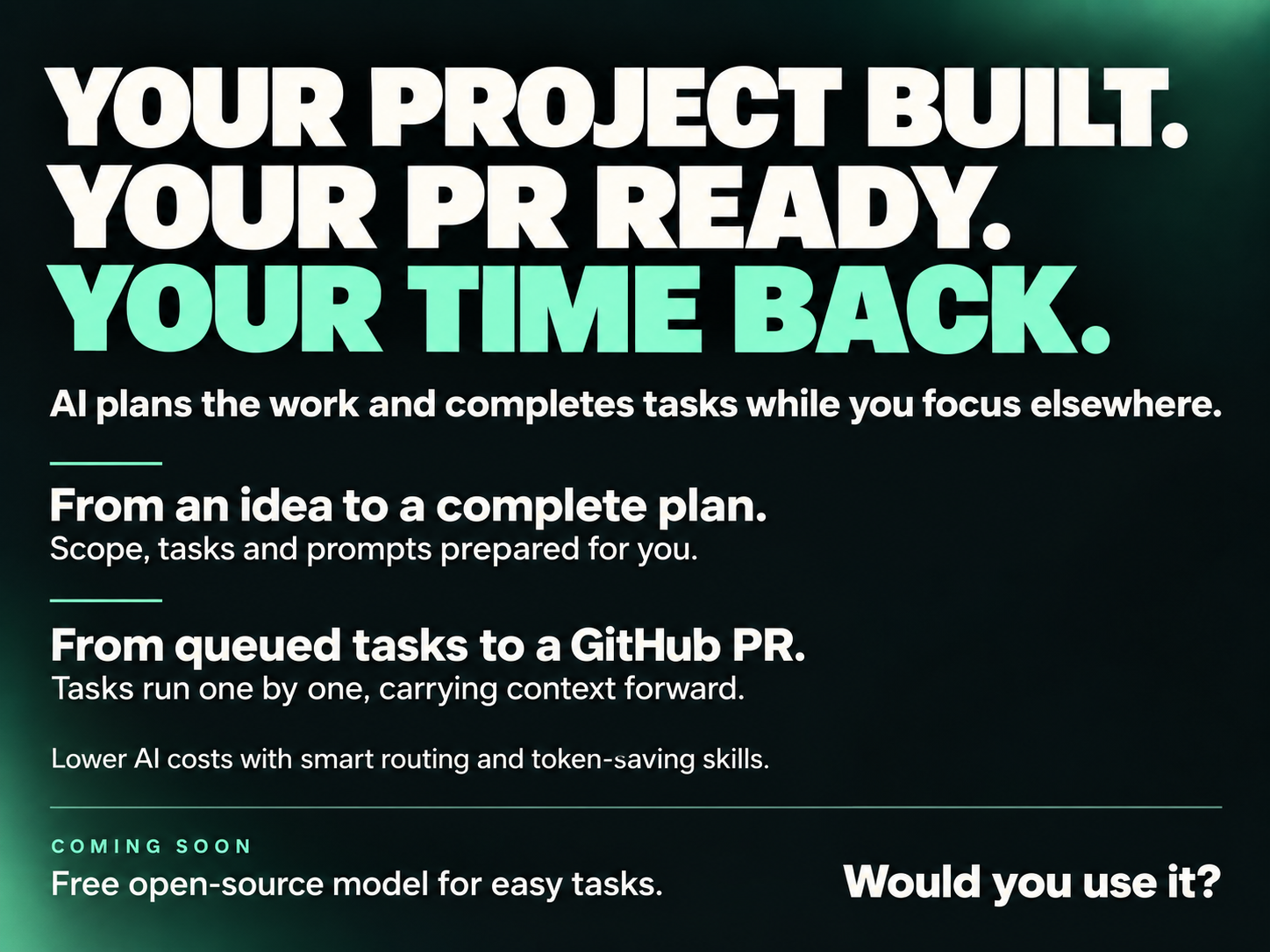
Vibe Planner automatically converts that into a complete project structure: epics, tasks, and milestones, with clear dependencies and estimated effort.
Clear Roadmaps and Kanban Boards
The system visualizes every project with task lists, status tracking, and Gantt-style overviews. This keeps all contributors aligned and helps creators stay focused on what matters most.
AI-Driven Insights
Vibe Planner analyzes patterns in tasks and AI prompts to recommend improvements. It might highlight which tasks repeatedly take longer or where prompts generate unclear output, helping users improve both speed and quality.
Integration with Real Developer Workflows
Vibe Planner connects with tools like GitHub, Notion, Jira, and Slack. Commits, issues, and pull requests automatically sync with the project plan. This creates a living roadmap that evolves alongside the actual code.
Collaborative Flow Between Humans and AI
Team members can comment, review, or reprioritize directly in the app. Even when AI generates most of the output, humans keep control of the direction and quality.
Real Benefits for Vibe Coders
1. Speed Without Losing Structure
Vibe Planner allows fast experimentation while preserving organization. You can brainstorm with AI freely, but every idea and task remains traceable.
2. Clarity for Teams and Individuals
Solo founders, indie hackers, and small startup teams can all use Vibe Planner as a single source of truth. Everyone can see what stage each feature is in.
3. Better Transition from Prototype to Product
AI can generate functional prototypes quickly, but scaling them is harder. Vibe Planner ensures you have a roadmap, making it easier to turn early demos into production-ready software.
4. Data-Driven Improvements
The platform uses analytics and historical data to suggest better sprint planning, workload balance, and code focus areas.
5. Reduced Cognitive Load
Instead of juggling multiple AI chats and to-do lists, Vibe Planner keeps everything in one place. You can focus on building and thinking creatively, not on remembering where things were left off.
Example Use Cases
Solo Founders
A single entrepreneur can use Vibe Planner to manage multiple product ideas. Each idea can evolve from a simple description into a full backlog without hiring a team.
Startup Teams
Co-founders can divide work logically. The non-technical founder writes product prompts, while the technical founder implements or fine-tunes generated code. Both track progress in one interface.
Freelancers and Clients
Freelancers can show clients a structured plan generated from the client’s initial idea. This improves communication and builds trust by showing transparency and progress.
Product Managers or Educators
They can use Vibe Planner to break down complex projects into understandable segments for presentation or teaching purposes.
Common Questions and Detailed Answers
Question 1: What makes Vibe Planner different from traditional project management tools?
Traditional tools expect users to already know what tasks exist. Vibe Planner starts earlier in the process — it converts an idea into a plan automatically using AI understanding. It is not just a tracker; it is a planner that thinks like a developer and a strategist combined.
Question 2: Can Vibe Planner really help non-developers create software?
Yes. Non-technical users can describe their ideas naturally, and the system generates detailed project blueprints that developers or AI systems can execute. It lowers the barrier to entry for building real applications.
Question 3: Is Vibe Planner only for AI-generated projects?
No. Even if you code manually, Vibe Planner helps structure and track everything. It is especially powerful when AI is part of your workflow but still valuable as a general project planning system.
Question 4: How does Vibe Planner support continuous improvement?
It uses data from previous tasks, prompts, and outcomes to identify inefficiencies. Over time, it learns what types of requests lead to delays or confusion and suggests how to improve productivity.
Question 5: Does Vibe Planner store or analyze my AI prompts?
Yes, it securely stores your project history and prompt context to help you revisit or reuse previous ideas. This is essential for understanding how a project evolved and avoiding redundant work.
Why Vibe Planner is a Game Changer for Modern Makers
Vibe coding gave creators infinite possibilities but also infinite chaos. Vibe Planner introduces the missing layer of structure that keeps creativity alive while maintaining direction. It transforms unstructured prompts into organized, trackable, and measurable work.
For vibe coders, this means less time managing and more time creating.
For teams, it means transparency, accountability, and faster results.
For founders, it means an easier path from idea to profitable SaaS.
Final Thoughts
Vibe Planner is not another generic task manager. It is a thinking layer for AI-driven product builders.
It takes the freedom of vibe coding and pairs it with the discipline of real project management.
If you are a vibe coder with ideas worth building, Vibe Planner helps you stay organized, move fast, and turn imagination into working software.