Vibe coding is one of the most exciting shifts in modern software development. You can describe an idea in plain language, ask AI to generate features, get working code in minutes, and move faster than many teams could just a few years ago. For founders, solo developers, product people, and agencies, it feels like a breakthrough.
And it is.
But it also creates a dangerous illusion.
Most people think the hard part of building with AI is getting the code right. They believe the biggest challenge is choosing the best model, writing better prompts, fixing syntax issues, or finding an AI tool that produces cleaner output. That sounds logical, but in real projects it is usually not the thing that breaks momentum.
The real problem with vibe coding is not the code.
The real problem is the lack of structure around the code.
That is where most AI assisted projects quietly fail. Not because the AI cannot generate code. Not because the app idea is bad. Not because the person building it is not technical enough. They fail because the project has no planning layer, no clear task breakdown, no memory between steps, no execution order, and no system for turning scattered prompts into a coherent product.
AI can generate code surprisingly well. What it still struggles to do consistently is manage the full context of a growing project the way an experienced developer or product lead would. That gap becomes bigger as your app becomes more complex.
So if your project started fast, felt amazing for a few days, and then turned into confusion, repeated prompts, inconsistent features, broken flows, and wasted time, you are not alone. That is not a coding problem. That is a planning problem.
This article explains why vibe coding often breaks down, what the real bottlenecks are, and how to build AI driven software projects in a way that actually scales.
What people think vibe coding is
Most people discover vibe coding through a simple experience.
They open an AI tool, describe a product idea, and see code appear almost instantly.
Maybe the prompt is something like this:
“Create a Laravel app for managing appointments with admin and client roles.”
Or:
“Build a SaaS dashboard with authentication, billing, and a kanban board.”
Or:
“Create a CRM for real estate agents with contact management and follow-up reminders.”
The AI responds with something impressive. It suggests models, creates routes, generates components, builds migrations, adds controllers, and sometimes even creates a polished user interface. In that moment, it feels like software development has changed forever.
That feeling is real. But it often leads people to assume that software building is now mostly a prompting problem.
It is not.
Generating code is only one part of building a product. A useful product also needs scope control, flow logic, feature priorities, reuse of previous decisions, consistency between screens, validation of assumptions, and a clear path from idea to working system.
In other words, coding is only one layer of product execution.
If you rely on vibe coding without managing the layers above it, the project becomes unstable very quickly.
Why the first 20 percent feels magical
Vibe coding works best at the beginning.
Early on, the project is small. The context is simple. The instructions are broad. There are only a few moving parts. AI is excellent in this phase because it can generate fast momentum.
It can help you:
Set up a project structure
Create authentication scaffolding
Generate CRUD interfaces
Build landing pages
Create basic database models
Suggest initial architecture
Prototype dashboard sections
Draft API endpoints
Write simple business logic
This is why so many builders become excited after the first session. They can see visible progress very quickly.
The problem starts when the project moves beyond setup and into product reality.
Now you need the generated parts to work together. You need consistency. You need the billing logic to match the user roles. You need the onboarding flow to feed into the dashboard. You need the saved project state to affect future tasks. You need revisions without breaking existing features. You need one AI generated screen to respect choices made in another screen three steps earlier.
This is where the magic often turns into friction.
The code may still look fine in isolation. But the product starts to feel disconnected.
The real bottleneck is context fragmentation
The biggest hidden problem in vibe coding is fragmented context.
Each prompt often behaves like a mini project. You ask for one feature, get a response, move to the next feature, refine a bug, request another screen, and slowly build the product across dozens or hundreds of separate interactions.
But software products are not a collection of isolated outputs.
They are connected systems.
A user role created in one step affects permissions elsewhere. A naming decision in the backend affects API responses, front-end components, tests, docs, and future prompts. A change in onboarding affects the dashboard, notifications, analytics, and billing.
When AI does not reliably carry this full context across tasks, the builder becomes the missing memory layer.
That means you spend more time:
Re-explaining the same project
Rewriting previous decisions
Correcting inconsistent naming
Fixing duplicated logic
Repairing broken assumptions
Re-aligning one feature with another
Restating user roles and business rules
Repeating architecture choices
This is why many people feel like they are moving fast but getting nowhere.
The code appears quickly, but the mental overhead becomes exhausting.
Code is easy to generate. Product coherence is not.
One of the biggest misconceptions about AI development is that if you can generate code, you can generate a product.
That is not true.
A product is not just code. A product is a sequence of decisions that all need to stay aligned.
Think about a simple SaaS product with these features:
User onboarding
Project creation
Task management
Subscription billing
Admin panel
Email notifications
Usage limits
Team invites
Analytics dashboard
Any experienced developer knows these are not just separate tasks. They are connected layers of the same system. Changes in one area can affect multiple others.
For example, if onboarding asks whether the user is solo or part of a team, that affects:
Available subscription plans
Permission structures
UI layout choices
Default project settings
Seat management
Collaboration workflows
Notification rules
AI can build each individual feature. But without a structured plan, there is a high chance those features will not align cleanly across the product.
That is why many AI built products feel impressive in screenshots but fragile in actual use.
Example: building a project management SaaS with pure vibe coding
Imagine you want to build a SaaS platform where users can create projects, generate AI tasks, drag tasks across a kanban board, and assign those tasks to different AI coding tools.
At first, things go well.
You prompt AI to create authentication.
Then you prompt it to create project models.
Then task generation.
Then kanban UI.
Then Stripe billing.
Then team collaboration.
Then notifications.
Each response looks productive.
But after a while, problems appear.
The task model uses one naming structure in the backend and another in the UI.
The kanban board supports statuses that the database schema does not fully match.
The subscription logic does not account for team members.
The onboarding flow never properly captures the information needed for task generation.
The AI generated prompts for tasks are not stored in a reusable way.
The project memory is not shared between tasks.
The permission logic for admins and members is inconsistent across screens.
Now you have code. Quite a lot of code.
But you do not have a clean product system.
The issue was never that the AI could not write the code. The issue was that the project was built as disconnected prompt outputs instead of a structured execution plan.
Vibe coding creates false confidence
This is one of the most important problems to understand.
AI generated progress feels like real progress. Sometimes it is. But sometimes it only feels that way because visible output is being produced.
You see new files.
You see new interfaces.
You see working components.
You see routes and controllers and database tables.
That creates confidence.
But if those outputs are not guided by a strong planning system, you can end up building fast in the wrong direction.
This is a classic product trap. Speed without direction does not save time. It multiplies rework.
In traditional development, this problem was often slowed down by the fact that writing code took longer. That forced more reflection. With AI, code appears so quickly that people skip the planning work entirely.
That makes the damage harder to detect early.
The builder mistakes output for alignment.
Why better prompts are not enough
A lot of advice around vibe coding focuses on writing better prompts.
This helps, but only to a point.
Yes, a clear prompt is better than a vague one. Yes, constraints matter. Yes, telling AI about the stack, architecture, file structure, naming conventions, and business rules improves output quality.
But prompt quality alone does not solve the deeper issue.
You can write a perfect prompt for one task and still damage the overall project if that task does not fit the product plan.
For example, you might ask AI:
“Create a team invitation system with pending invites, email confirmation, and role assignment.”
That is a good prompt.
But if your app’s billing system does not yet handle seat counts, or your onboarding never asks whether a workspace supports multiple users, or your permission matrix is not defined, then even good code can create downstream chaos.
This is why planning has to come before prompting.
The best prompt in the world cannot replace missing product logic.
What actually breaks vibe coding projects
Let’s talk about the real failure points.
Most vibe coding projects break because of one or more of these issues:
No task decomposition
The app idea lives as a large paragraph instead of a structured execution plan. That means every prompt is trying to solve too much at once, or solve one isolated problem without understanding the full roadmap.
No shared memory between tasks
The AI does not reliably remember product decisions from previous prompts. The result is repeated explanations, inconsistent outputs, and drifting logic.
No prioritization
Founders and builders jump between features based on excitement rather than dependency order. They build dashboards before defining data structure, add billing before validating the core flow, or create automation before the base product is stable.
No system boundaries
The AI is allowed to make architectural decisions on the fly, without a clearly defined system design. That leads to mixed conventions, duplicated logic, and hard to maintain code.
No review layer
The builder assumes generated code is correct because it looks polished. But visually impressive output can still hide fragile logic, security issues, poor structure, or product inconsistencies.
No product continuity
Each feature is treated as a separate success, but no one is checking whether the product experience remains coherent from onboarding to daily usage.
None of these are really about the code itself.
They are about project orchestration.
The difference between coding help and product execution
This distinction matters a lot.
AI coding tools are great at helping you produce implementation. They can generate controllers, components, migrations, tests, API clients, schema definitions, UI sections, and automation logic.
But product execution requires more than implementation.
It requires:
Understanding what should be built first
Knowing which decisions affect future work
Maintaining consistency across tasks
Defining dependencies between features
Avoiding redundant work
Capturing product memory
Turning a large idea into smaller executable units
Knowing when a feature is ready for implementation
Recognizing when a task is too broad or too vague
Managing flow, not just files
That is why serious AI building needs more than a chat box.
It needs a planning system.
Why solo founders struggle even more
Solo founders are some of the biggest users of vibe coding, and for good reason. AI gives them leverage they never had before. A founder with product sense and strong motivation can now move faster than small teams used to.
But solo founders are also especially vulnerable to the weaknesses of unstructured AI development.
Why?
Because they are usually playing multiple roles at once:
Founder
Product manager
Developer
Designer
Marketer
QA
Support
Decision maker
When all of that sits in one brain, context management becomes the real bottleneck. Not typing speed. Not coding syntax. Not design details.
AI helps reduce implementation load, but it does not automatically reduce cognitive load.
In fact, without a system, it can increase it.
Now the founder is not just building the product. They are also constantly managing AI context, correcting drift, restating assumptions, and trying to remember what decisions have already been made.
This is where many promising solo projects stall.
The founder gets tired before the product gets stable.
Example: the same product with structured planning
Now let’s look at the same SaaS idea, but with a planning layer before coding starts.
Instead of prompting for code immediately, the builder first defines:
The product goal
The target user
The core value proposition
The MVP scope
The feature dependencies
The user roles
The main data objects
The onboarding inputs
The subscription model
The execution phases
Then the project is broken into small tasks such as:
Set up user authentication and workspace model
Define project schema and project ownership rules
Create onboarding flow for product description and goals
Generate task creation logic from onboarding inputs
Build kanban board with task statuses aligned to schema
Store AI task prompts with task level context
Create memory sharing mechanism between tasks
Add Stripe plan restriction for number of active projects
Add admin analytics page for workspace usage
Write tests for workspace permissions and task actions
Now each prompt becomes more useful because it exists inside a larger system.
AI is no longer being asked to invent the product while building it.
AI is being asked to execute clearly defined tasks.
That changes everything.
Good AI development feels less magical and more reliable
This is something many builders resist at first.
They want the magic. They want the feeling of typing a big idea into a prompt and watching an app appear.
But the best AI driven product development often feels a little less magical and a lot more intentional.
It looks like:
Clear tasks
Defined scope
Shared memory
Ordered execution
Reusable context
Review loops
Structured refinement
This may feel slower in the first hour.
But it is much faster by the end of the month.
Because now the project compounds instead of collapsing.
Why task based building wins
Task based building is one of the most effective ways to make vibe coding actually work.
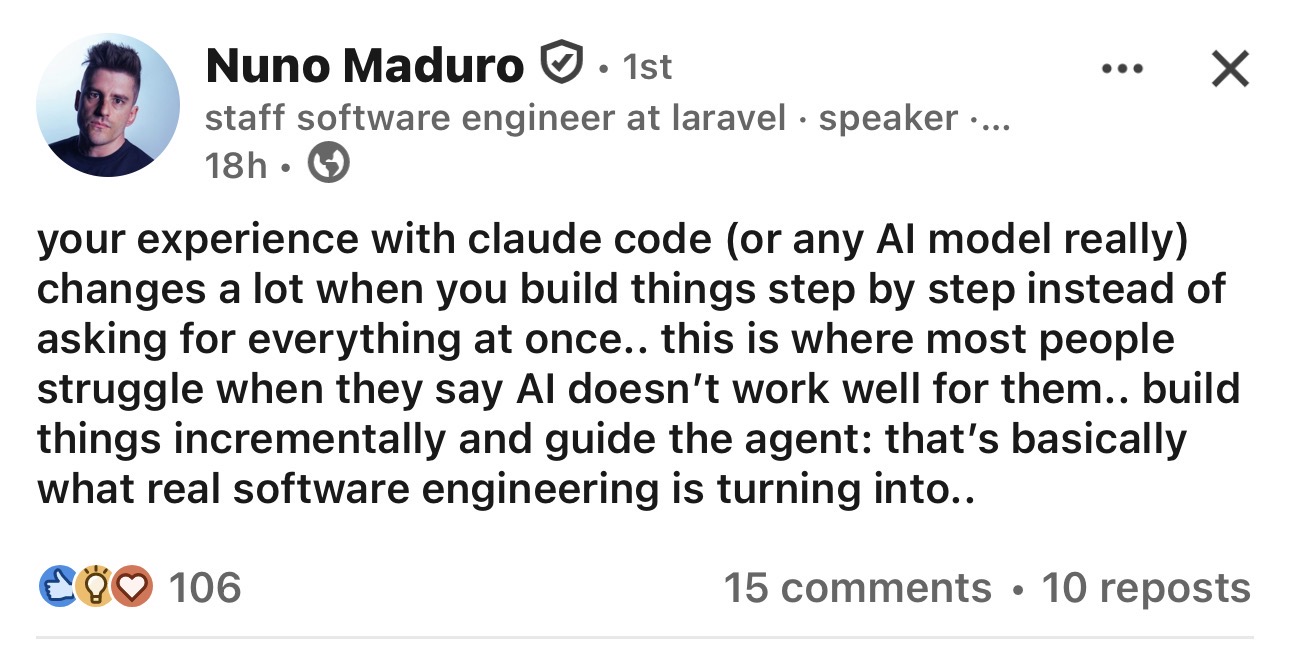
Instead of asking AI to build a full product in giant prompts, you break the project into smaller, meaningful units. Each unit has a goal, context, constraints, and a clear output.
For example, instead of this:
“Build my whole client portal with authentication, projects, messaging, payments, reports, and admin.”
You use a flow like this:
Task 1: Define user roles and permission matrix
Task 2: Create authentication and role based middleware
Task 3: Create project model and project ownership logic
Task 4: Build client project listing page
Task 5: Add project detail page with status and communication tab
Task 6: Add invoice model and payment status integration
Task 7: Create admin overview with project and payment summaries
This gives AI a much better environment to succeed.
It also gives the human builder something even more important:
control.
The importance of shared memory between tasks
One of the biggest upgrades in AI assisted software building is the idea of shared memory between tasks.
Without it, every task starts partially blind.
With it, the AI can work from accumulated project knowledge such as:
Product summary
Target users
Chosen stack
System architecture
Naming conventions
Business rules
Dependencies
Decisions from previous tasks
Known limitations
UI patterns
Validation rules
This means when you create a new task, the AI is not guessing from scratch.
It is building from continuity.
That leads to better consistency, less repetition, and fewer contradictory outputs.
Shared memory is not just a convenience feature. It is one of the core requirements for turning vibe coding into a real development workflow.
Why product planning matters even for developers
Some experienced developers assume they do not need a planning layer because they already understand architecture.
But even developers benefit massively from structured AI planning.
Why?
Because the issue is not technical skill. The issue is scaling context across many AI interactions.
A senior developer may know exactly how to build a system manually. But when using AI across dozens of prompts, context drift still happens. Decisions still get lost. Repetition still wastes time. Generated code can still conflict with earlier assumptions.
Planning does not replace developer skill.
It amplifies it.
It lets experienced builders use AI with more precision and less friction.
What a healthy vibe coding workflow looks like
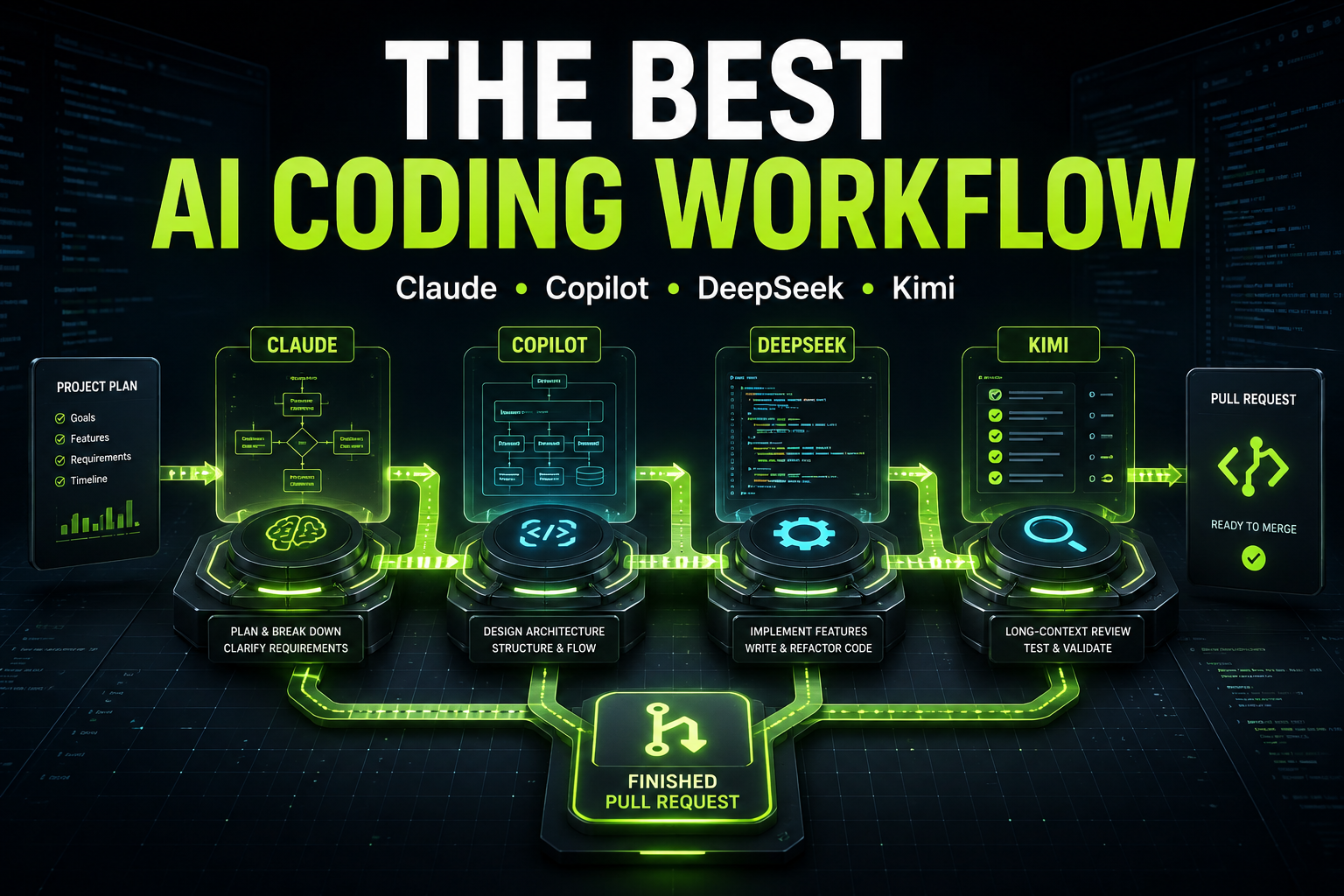
A healthy AI development workflow usually follows a sequence like this:
You start with the product idea.
You define the core outcome.
You clarify who the user is.
You reduce the app to the smallest meaningful MVP.
You define the main entities and flows.
You break the product into executable tasks.
You arrange those tasks by dependency.
You store project memory.
You send one well scoped task at a time to AI.
You review, refine, and then move to the next task.
This does not kill creativity.
It makes creativity useful.
Because now every generated output contributes to a real product direction.
Vibe coding without planning is like building from fragments
A good way to think about the problem is this:
Vibe coding without planning is like building a house by ordering beautiful parts without an architectural plan.
You might get:
A strong front door
Nice windows
Modern lighting
Good kitchen cabinets
A beautiful staircase
But that does not mean the house works.
Maybe the staircase leads nowhere.
Maybe the windows do not fit the wall layout.
Maybe the wiring conflicts with the plumbing.
Maybe the kitchen placement breaks the floor plan.
The parts can be good and the result can still fail.
That is what happens in many AI coding projects.
The code fragments may be individually useful, but the product architecture is weak.
Common signs your project has a planning problem, not a coding problem
Here are some signs that your vibe coding process is suffering from missing structure:
You keep repeating the same project explanation to AI
Features work alone but feel disconnected together
Naming conventions change across screens or files
You are unsure what to build next
Your prompts are getting longer and harder to manage
You are fixing previous AI output more than using it
Small changes break unrelated parts of the app
The project feels bigger every day but not closer to launch
You have many features but no clean end to end flow
You are generating code faster than you can validate product logic
If this feels familiar, your issue is probably not that the AI is weak.
Your issue is that the project lacks orchestration.
The shift builders need to make
To make vibe coding work long term, builders need to change one core assumption.
Do not think of AI as a magical software creator.
Think of AI as a highly capable implementation partner that performs best inside a structured system.
That means your job is not just to prompt.
Your job is to design the execution environment.
That environment includes:
A clear product goal
Well scoped tasks
Stored project memory
Defined dependencies
Review checkpoints
Consistent naming and rules
A logical order of implementation
Once you do that, the value of AI increases dramatically.
Why this matters for the future of software building
This issue is bigger than one workflow trend.
As AI becomes more capable, more people will enter software creation. Founders, marketers, operators, creators, and business owners will all use AI to build products. That is a huge opportunity.
But the winners will not just be the people with access to the best models.
They will be the people with the best systems for directing those models.
In other words, the future advantage is not just code generation.
It is AI orchestration.
People who understand planning, execution flow, memory, structure, and product logic will build better software faster. People who rely only on raw prompting will create more code but not necessarily better products.
That difference will matter a lot.
Where Vibe Planner fits into this
This is exactly why tools like Vibe Planner matter.
The goal is not just to help people generate code.
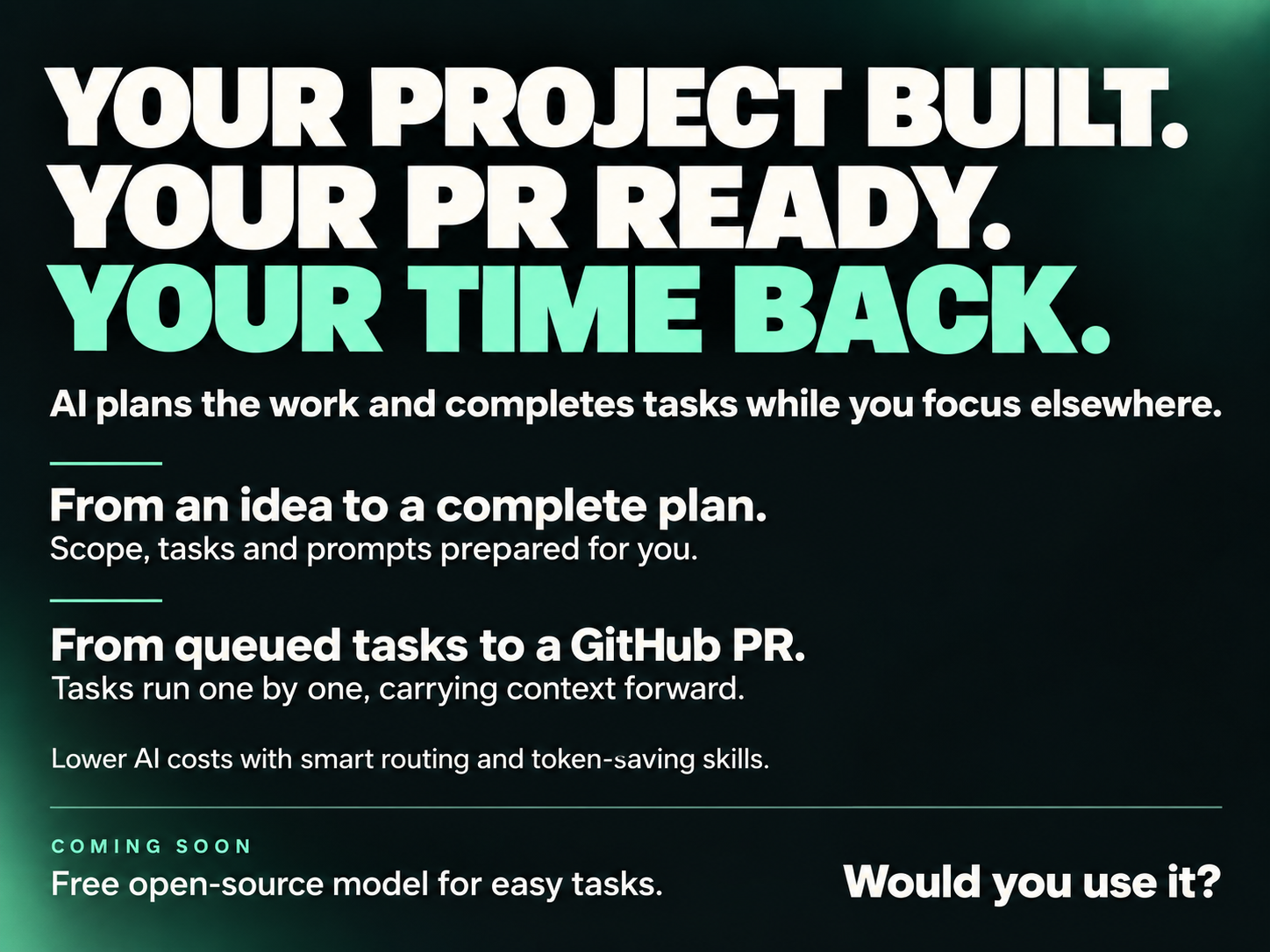
The goal is to help them turn an idea into a structured, executable plan that AI can actually follow.
That means helping users:
Break software ideas into smaller tasks
Create order and dependency between tasks
Preserve project context
Share memory across the full plan
Reduce repeated prompting
Keep product logic aligned
Move from idea to execution with less chaos
That is the missing layer in many AI workflows.
Without it, vibe coding often becomes random output production.
With it, vibe coding becomes a repeatable product building system.
Final thoughts
The real problem with vibe coding is not the code.
Code is often the easiest part to generate now.
The harder part is keeping the project coherent as it grows. The harder part is holding the logic together. The harder part is knowing what to build, in what order, with what context, and how each piece connects to the next.
That is why so many AI built projects start with excitement and end in confusion.
Not because AI failed to write code.
Because no one built the system around the code.
If you want better results from AI development, stop thinking only about prompts and start thinking more about planning.
Stop asking only how to generate features faster.
Start asking how to turn a software idea into a structured flow that AI can execute cleanly.
That is where the real leverage is.
That is how vibe coding becomes something more than a demo.
That is how it becomes a serious way to build products.