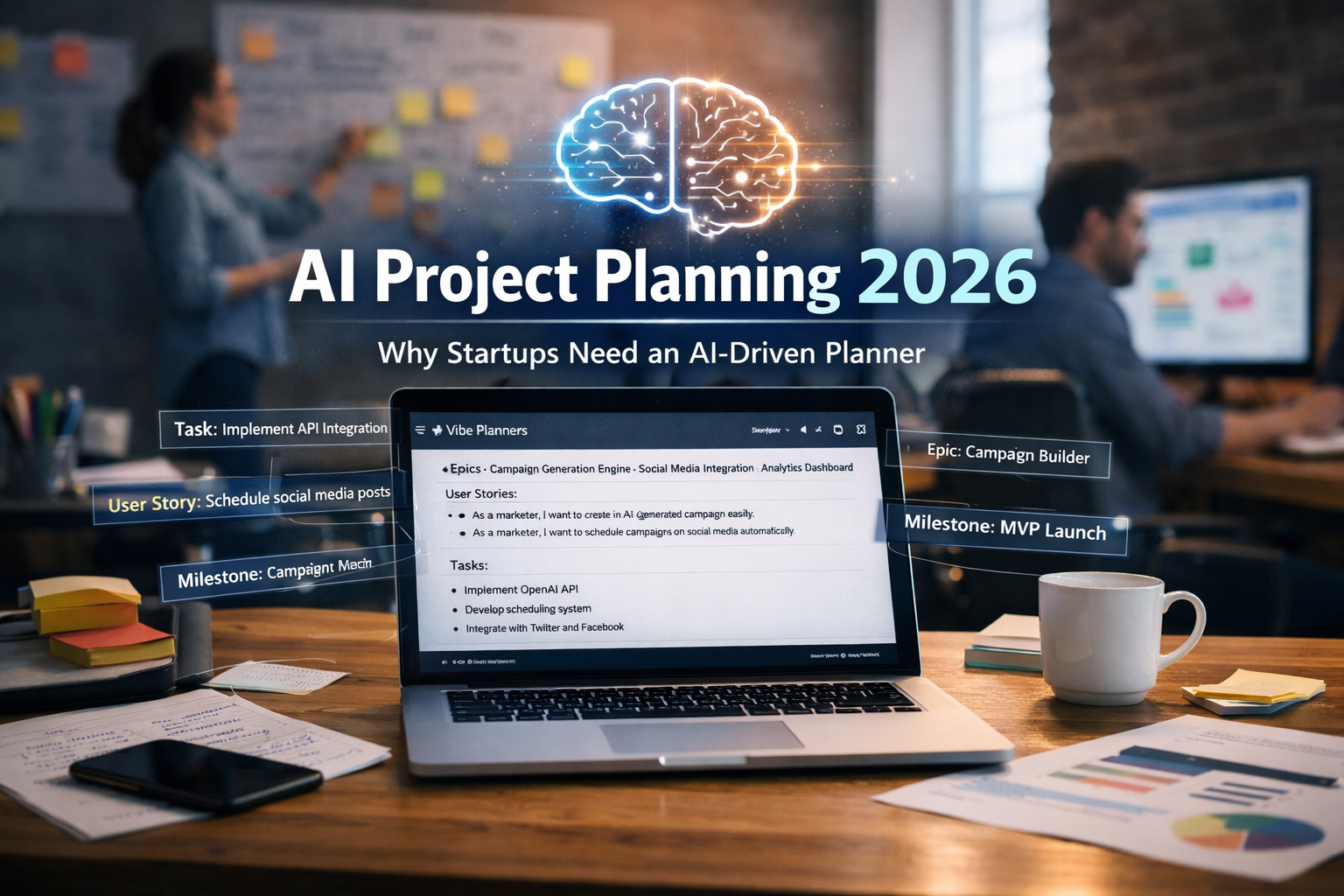
Introduction: Project Planning Is Broken And Startups Feel It First
Every startup begins with a simple idea.
A product.
A feature.
A platform.
A solution.
Then reality hits.
Requirements start changing. Priorities shift. Deadlines move. Stakeholders ask for new features. Developers get blocked. Product managers fight scope creep. Founders lose visibility. Roadmaps become outdated the moment they are written.
Traditional project planning was built for a slower world.
In 2026, startups operate in real time. Markets change weekly. AI accelerates development cycles. Competitors ship faster. Customers expect constant iteration. Teams are remote and distributed.
And yet most startups still plan their projects with tools designed for 2010.
Spreadsheets.
Static roadmaps.
Manual backlog grooming.
Endless meetings.
Disconnected tools.
This is why AI project planning is no longer optional.
It is becoming a core operational advantage.
In this article, we will explore:
- What AI project planning really is
- Why traditional planning no longer works for startups
- How AI-driven planners change the entire execution model
- What features matter in an AI planner
- How startups use AI planning to ship faster and smarter
- Why 2026 is the tipping point
- How tools like Vibe Planner are redefining the way teams build software
This is your complete guide to AI project planning.
What Is AI Project Planning
AI project planning is the use of artificial intelligence to transform high-level ideas into structured, actionable execution plans.
Instead of manually writing tasks, user stories, acceptance criteria, dependencies, timelines, and roadmaps, an AI planner does this automatically from natural language input.
You describe what you want to build.
The AI creates:
- Epics
- Features
- User stories
- Technical tasks
- Dependencies
- Priorities
- Milestones
- Execution phases
In seconds.
The AI acts as a senior product manager, technical architect, and delivery lead combined into one system.
AI project planning is not about replacing developers or PMs.
It is about removing friction, eliminating planning overhead, and compressing time-to-execution.
The goal is simple:
Turn ideas into execution instantly.
Why Traditional Project Planning No Longer Works
Most startups still use the same planning workflow:
- Idea phase
- Strategy meetings
- Product roadmap
- Backlog grooming
- Sprint planning
- Task breakdown
- Estimation sessions
- Prioritization meetings
- Documentation
- Alignment meetings
This process is slow, expensive, and fragile.
The Problems with Traditional Planning
1. Planning Takes Too Long
A simple product idea can take weeks to turn into a real roadmap.
By the time planning is finished, the market has already moved.
2. Plans Become Outdated Instantly
Static roadmaps are obsolete the moment priorities change.
Every pivot invalidates the plan.
3. Knowledge Lives in People’s Heads
If your product manager leaves, your roadmap leaves with them.
If your lead developer quits, your architecture disappears.
4. Documentation Is Never Up to Date
No one enjoys maintaining documentation.
So it gets skipped.
Then ignored.
Then forgotten.
5. Founders Lose Visibility
Executives often have no real-time view of what is happening.
They see slides, not reality.
6. Planning Is Expensive
Good product managers and delivery leads are expensive.
And startups need many of them.
7. Teams Waste Time in Meetings
Hours per week are lost to planning meetings instead of building.
Why Startups Need AI Project Planning
Startups live in a world of constraints:
- Limited capital
- Small teams
- Tight deadlines
- High pressure
- Rapid change
They cannot afford inefficiency.
AI project planning gives startups a leverage advantage.
The Core Benefits
1. Speed
AI creates project plans in seconds.
What used to take weeks now takes minutes.
2. Clarity
AI turns vague ideas into structured execution plans.
No ambiguity.
No guesswork.
No missing pieces.
3. Consistency
Every project follows a proven structure.
No more ad-hoc planning.
No more chaos.
4. Scalability
AI planners scale with your team.
Whether you have 2 developers or 200, planning stays fast.
5. Alignment
Everyone sees the same plan.
The same priorities.
The same roadmap.
6. Adaptability
Change the prompt.
Regenerate the plan.
Pivot instantly.
What Makes an AI Planner Different from a Task Manager
A task manager stores tasks.
An AI planner creates them.
This is a fundamental difference.
Tools like Jira, Notion, Trello, Asana, and ClickUp are databases.
They are empty until humans fill them.
AI planners are generators.
They create structure automatically.
Traditional Tools
- Require manual setup
- Require manual breakdown
- Require manual prioritization
- Require manual documentation
- Require manual updates
AI Planning Tools
- Generate tasks from ideas
- Create dependencies
- Suggest priorities
- Build roadmaps
- Maintain structure
- Adapt to change
The AI becomes your planning engine.
How AI Project Planning Works in Practice
Let’s walk through a real example.
A founder types:
I want to build a SaaS platform that allows marketing teams to generate social media campaigns using AI and schedule them automatically.
An AI planner like Vibe Planner will generate:
Epics
- Authentication and user management
- Campaign generation engine
- AI prompt system
- Social media integrations
- Scheduling system
- Analytics dashboard
- Billing and subscriptions
Features
For Campaign Generation:
- Prompt builder UI
- Campaign templates
- AI model integration
- Tone and brand controls
- Output preview
User Stories
- As a marketer, I want to generate a campaign from a short description
- As a marketer, I want to choose a tone of voice
- As a marketer, I want to preview posts before publishing
Technical Tasks
- Setup OpenAI API integration
- Build campaign schema
- Implement prompt templates
- Build campaign editor
- Implement scheduling engine
- Connect social APIs
Dependencies
- Auth system before campaign creation
- Campaign engine before scheduling
- Social APIs before publishing
Milestones
- MVP launch
- Beta onboarding
- Public release
All from a single prompt.
This is AI project planning.
Why 2026 Is the Tipping Point
AI project planning is not new.
But 2026 is when it becomes mainstream.
Three Forces Are Converging
1. AI Coding Is Exploding
Tools like Cursor, Claude, Copilot, Devin, and GPT-based agents are accelerating development.
Developers can now write code 2x to 5x faster.
But planning has not caught up.
AI planners close the loop.
2. Startups Are Shipping Faster Than Ever
The cost of building software has collapsed.
One founder can now build what used to require a team of 10.
Execution speed is everything.
3. Competition Is Global
You are no longer competing with local startups.
You are competing with the world.
AI gives speed.
Speed wins.
The Rise of Prompt-Driven Product Development
In 2026, product development starts with a prompt.
Not a PRD.
Not a roadmap.
Not a 40-page document.
A prompt.
This is known as prompt-driven development.
The workflow looks like this:
- Founder writes product idea
- AI planner generates execution plan
- AI coding tools implement features
- AI testing tools validate
- AI deployment pipelines ship
- AI analytics track performance
The entire software lifecycle is AI-accelerated.
Planning is the first step.
If planning is slow, everything is slow.
What to Look for in an AI Project Planner
Not all AI planners are created equal.
Here are the features that matter in 2026.
1. Natural Language Input
You should be able to describe your idea in plain English.
No templates.
No forms.
No rigid structure.
Just describe what you want.
2. Structured Output
The AI should generate:
- Epics
- Features
- User stories
- Tasks
- Dependencies
- Phases
In a clean, usable format.
3. Prompt per Task
Each task should include an AI-ready prompt that developers can feed into their coding tools.
This connects planning directly to execution.
4. Kanban and Roadmap Views
You need visibility.
Backlogs.
Boards.
Timelines.
Planning without visualization is useless.
5. Regeneration and Iteration
You should be able to:
- Refine prompts
- Add constraints
- Regenerate plans
- Expand features
Planning is iterative.
AI should support that.
6. Collaboration
Teams need to comment, edit, and align.
AI should enhance collaboration, not replace it.
How Startups Use AI Project Planning in Real Life
Use Case 1: Solo Founder Building an MVP
A solo founder wants to validate a SaaS idea.
They describe the product.
AI generates the roadmap.
AI breaks it into tasks.
AI provides prompts for each feature.
They use Cursor or Claude to build.
Time to MVP: weeks instead of months.
Use Case 2: Agency Building Client Projects
An agency receives a new client.
They input the client requirements.
AI generates the full delivery plan.
They get instant scope clarity.
They generate estimates faster.
They deliver faster.
Use Case 3: Startup Scaling from MVP to Product
A startup has an MVP and wants to scale.
They describe new features.
AI integrates them into the roadmap.
Dependencies are mapped.
Milestones are created.
No chaos.
No confusion.
Use Case 4: Product Teams Running Sprints
Teams generate sprint plans from goals.
The AI suggests tasks.
The team reviews and adjusts.
Sprint planning takes minutes.
Why AI Planning Improves Product Quality
Faster planning does not mean lower quality.
In fact, AI planning often improves quality.
1. No Missing Pieces
AI planners use large knowledge bases of best practices.
They do not forget authentication.
They do not forget security.
They do not forget monitoring.
They do not forget testing.
Humans do.
2. Better Architecture
AI suggests proven patterns.
It has seen thousands of architectures.
It knows what works.
3. Better Documentation
Every task comes with context.
Every feature has a description.
Documentation is generated automatically.
4. Better Onboarding
New developers understand the project instantly.
No tribal knowledge.
The Role of AI Planners in the AI Coding Stack
AI planners are the missing link.
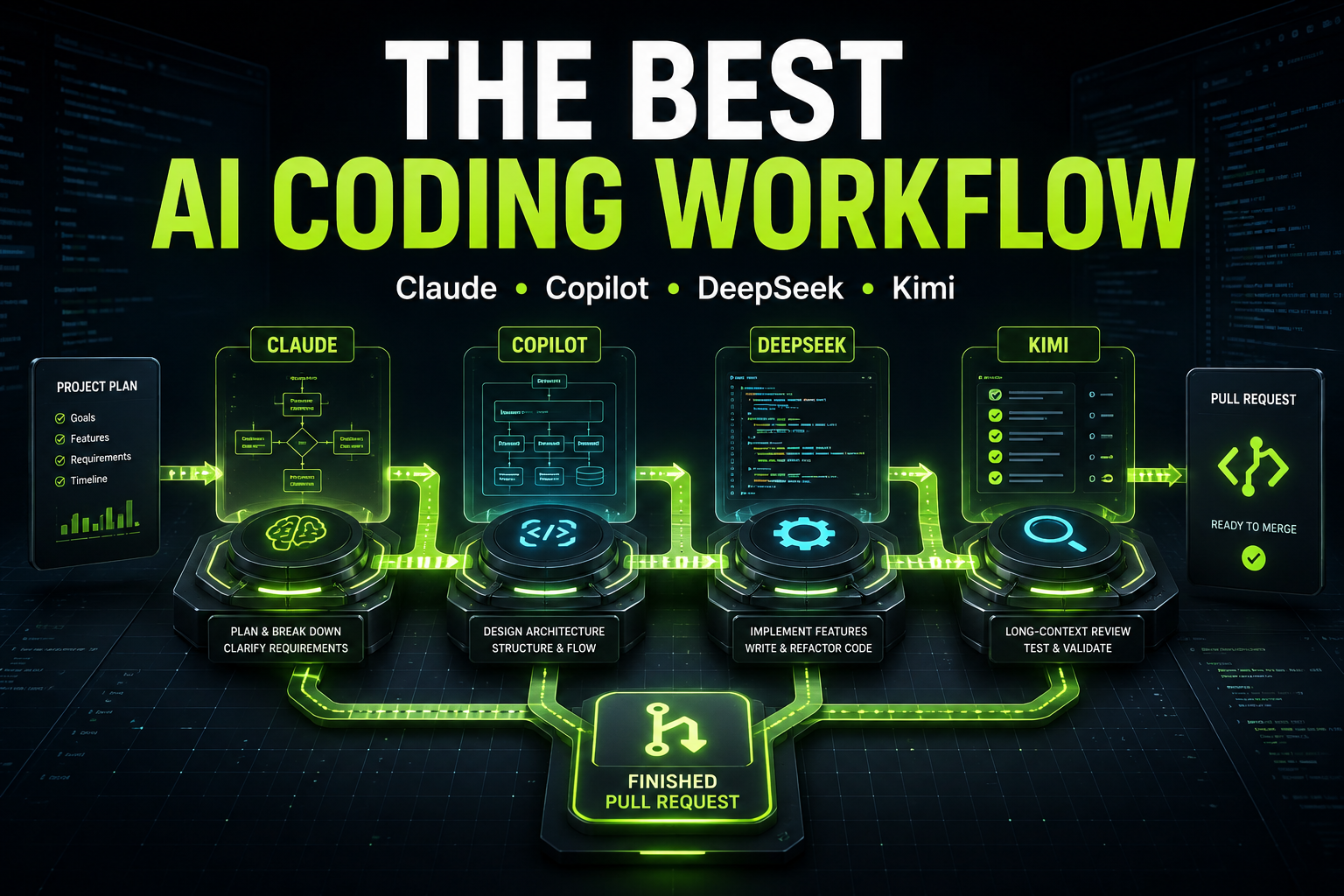
The AI coding stack looks like this:
- AI Planner generates tasks
- AI Coding Tools implement code
- AI Testing validates
- AI Deployment ships
- AI Monitoring tracks
Without an AI planner, the stack starts in chaos.
With an AI planner, the stack starts with structure.
Why Vibe Planner Is Built for This Future
Vibe Planner is designed specifically for prompt-driven development and vibe coding workflows.
It is not just another task manager.
It is an execution engine.
What Makes Vibe Planner Different
- Built for AI-first workflows
- Prompt per task architecture
- Kanban execution boards
- Roadmap generation
- Startup-focused UX
- Developer-friendly structure
- Fast iteration loops
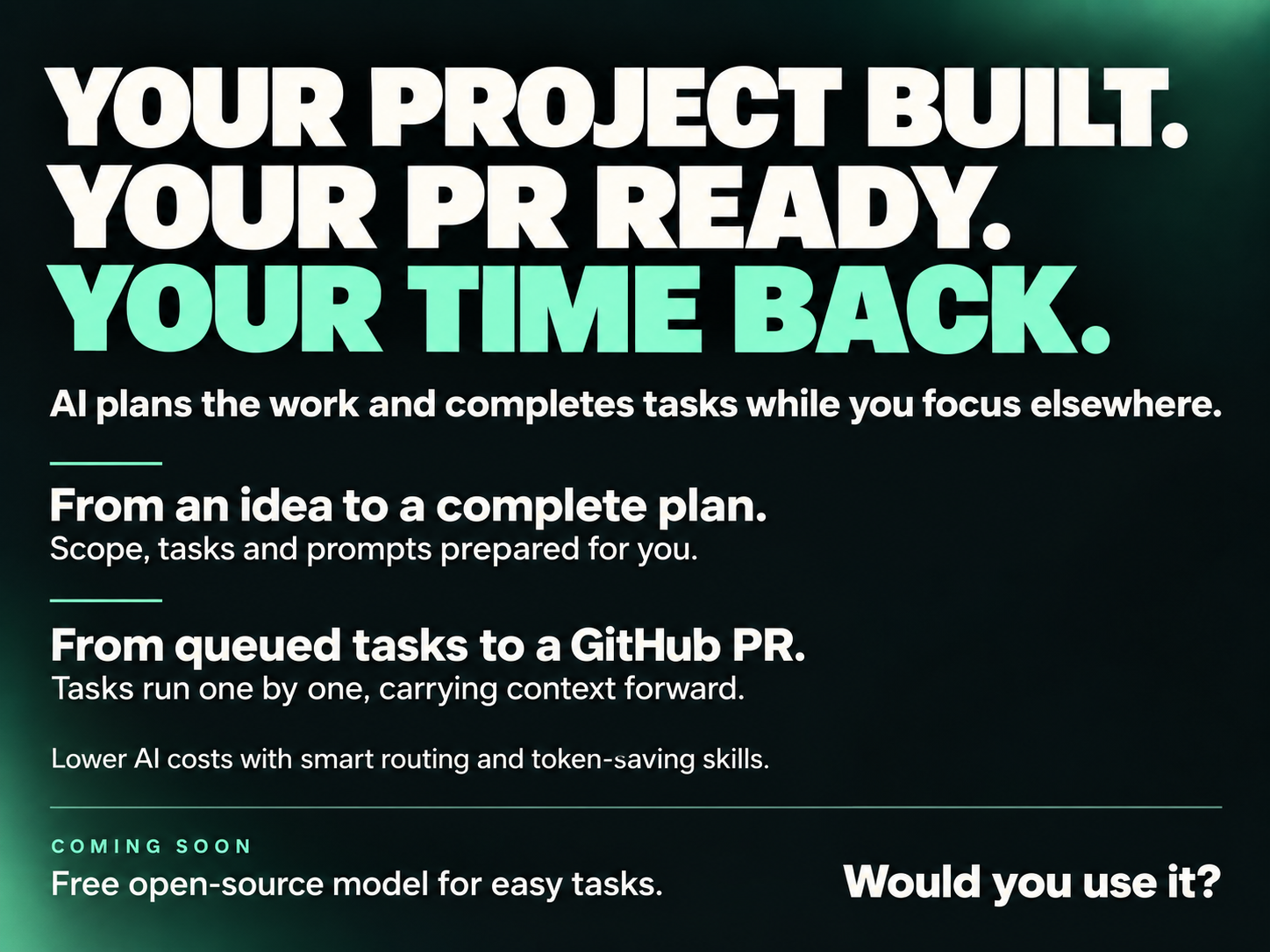
Vibe Planner turns ideas into execution plans that developers can immediately build with AI coding tools.
It connects planning to coding.
This is the future of software delivery.
The Business Impact of AI Project Planning
Startups that adopt AI planning gain massive advantages.
Faster Time to Market
Ship before competitors.
Lower Burn Rate
Less planning overhead.
Fewer meetings.
Smaller teams.
Higher Execution Quality
Better architecture.
Better structure.
Fewer mistakes.
Better Investor Story
Clear roadmaps.
Clear milestones.
Clear execution plans.
Higher Team Velocity
Developers spend more time coding.
Less time planning.
AI Project Planning Is Becoming the New Standard
In 2026, the question is no longer:
Should we use AI for planning?
The question is:
Why are we still planning manually?
The same transition already happened with:
- Cloud infrastructure
- CI/CD pipelines
- Containerization
- DevOps
- AI coding
Planning is the last piece.
And it is falling.
The Future of Project Management Is Prompt-Driven
The role of the product manager is evolving.
They are no longer writing backlogs.
They are shaping prompts.
They are guiding AI.
They are validating output.
They are orchestrating execution.
AI does the heavy lifting.
Humans do the strategy.
This is the new model.
Final Thoughts: Why Every Startup Needs an AI Planner in 2026
Startups win by moving faster than everyone else.
AI is the biggest leverage tool ever created.
If you use AI for coding but not for planning, you are only using half of its power.
AI project planning is not a trend.
It is a new operating system for startups.
The companies that adopt it early will dominate.
The ones that resist will fall behind.
If you want to build faster, smarter, and with more clarity, AI project planning is no longer optional.
It is your unfair advantage.
Ready to Experience AI Project Planning?
If you want to see what AI-driven planning looks like in practice, explore Vibe Planner and experience prompt-driven execution firsthand.
Turn ideas into execution in minutes.
Welcome to the future of building.
Frequently Asked Questions About AI Project Planning
What is AI project planning?
AI project planning is the use of artificial intelligence to turn a product idea or business requirement into a structured execution plan. Instead of manually creating backlogs, roadmaps, and task breakdowns, an AI planner generates epics, features, user stories, technical tasks, dependencies, milestones, and execution phases automatically from natural language input.
Why do startups need AI-driven project planning in 2026?
In 2026, startups operate in faster product cycles with tighter budgets and constant market changes. AI-driven planning reduces the time spent on documentation and backlog creation, improves clarity across teams, speeds up execution, and allows founders and product teams to adapt instantly when priorities shift.
How is an AI planner different from Jira, Trello, or Notion?
Traditional project management tools store tasks after humans create them. An AI planner generates the project structure automatically from a simple description of your idea. It creates task breakdowns, dependencies, priorities, and often includes prompts per task that can be used directly with AI coding tools.
Can AI project planning replace product managers?
AI project planning does not replace product managers. It automates repetitive planning work so product managers can focus on strategy, validation, prioritization, and stakeholder alignment. The AI handles the heavy lifting of structuring and documenting execution plans.
What should an AI project planner generate from a single prompt?
A strong AI project planner should generate epics, features, user stories, technical tasks, acceptance criteria, dependencies, milestones, and a phased roadmap that teams can execute immediately.
What are the key features to look for in an AI project planning tool?
The most important features include natural-language planning, structured output, dependency mapping, roadmap and kanban views, easy regeneration and iteration, collaboration support, and prompts per task that connect planning directly to AI coding workflows.
Does AI project planning improve or reduce software quality?
When used correctly, AI project planning can improve software quality by reducing missing requirements, encouraging best-practice architecture, and generating consistent documentation and acceptance criteria that teams can review and refine.
How do teams use AI project planning with AI coding tools?
Teams generate a roadmap and task list with an AI planner, then use the prompts per task with AI coding tools to implement features faster. This creates a connected workflow from idea to backlog to code.
Is AI project planning useful for solo founders building an MVP?
Yes. Solo founders can turn an idea into a structured MVP plan quickly, identify the critical path, and use AI prompts per task to build features faster without spending weeks on manual planning.
How do I get started with AI project planning?
Start with a clear product prompt describing your users, core features, constraints, and success criteria. Generate a plan, review the output, refine priorities and scope, then execute tasks in phases while iterating as requirements evolve.